

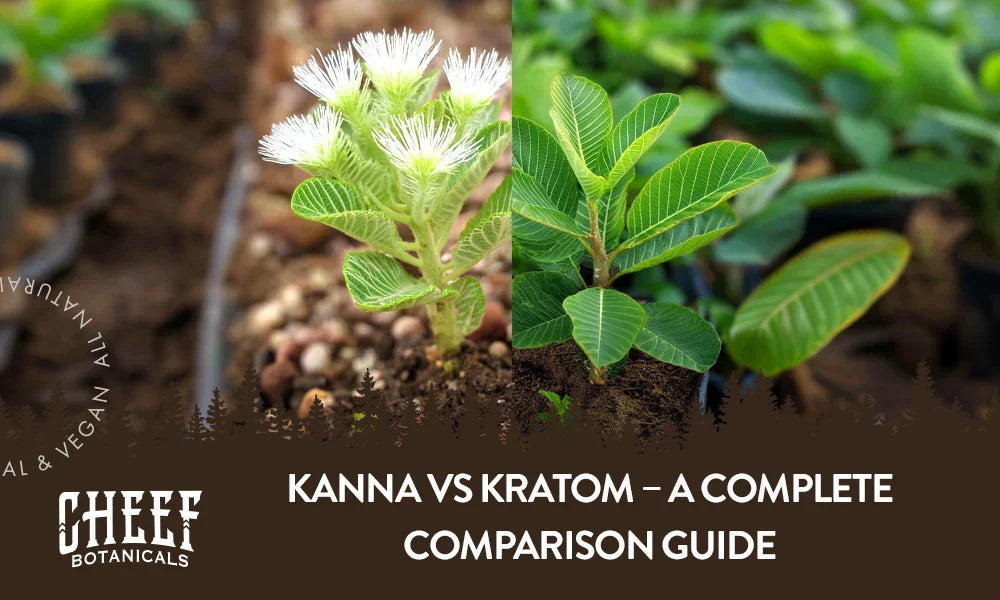
Kanna vs Kratom is a popular comparison for people interested in natural supplements. Kanna grows in South Africa, while Kratom comes from Southeast Asia. Both have a long history of cultural use.
Kanna is a succulent plant often brewed into teas or made into extracts. Kratom leaves, taken from a tall tropical tree, are usually dried into powder form or prepared as teas. Each plant carries unique traditions and ways of consumption.
Both contain active compounds that may support mood, focus, or relaxation in different ways. Their effects vary by form, dosage, and personal preference. Keep reading as we will compare their origins, benefits, and legal status.
What Is Kanna?

Kanna is a succulent plant known as Sceletium tortuosum. It grows naturally in South Africa, where it has been consumed for centuries. Communities valued its role in rituals and daily life, often chewing the plant or brewing it into teas. Today, you can find kanna tincture, teas, and powder forms sold in online shops. People look to kanna for its calming effect and potential mood-enhancing properties.
Key Active Alkaloids in Kanna
The plant contains active compounds such as mesembrine, mesembrenone, and mesembrenol. These alkaloids are believed to play a role in kanna’s unique effects. They may influence serotonin levels in the brain, which can lead to relaxing effects and mood support. Consumers often say kanna offers different effects than other botanicals, giving it a distinct place among natural supplements.
What Is Kratom?
Kratom, also known as Mitragyna speciosa, is a tropical tree found in Southeast Asia. People have consumed kratom leaves for centuries in countries like Thailand, Malaysia, and Indonesia. Traditionally, locals chewed fresh leaves or brewed them into tea for energy and focus.
Today, kratom products include powder, capsules, and extracts available in online shops. Many consumers turn to this herb for its unique effects that can help you feel energized or promote relaxation.
Kratom’s Main Compounds
Kratom contains more than 50 alkaloids, but two stand out as the most active compounds. Mitragynine and 7-hydroxymitragynine are the key drivers of the plant’s effects. They interact with opioid receptors in the body, which can influence energy, mood, and discomfort. At lower doses, kratom may help boost energy and focus, while higher doses may lead to relaxing effects and calm. These properties set kratom apart from other botanicals.
Kanna Versus Kratom – How Do They Differ?
Kanna and kratom are two botanicals often compared because of their unique effects and cultural backgrounds. While both plants share a role in natural supplements, they differ in origin, chemical makeup, and the way people consume them.
Plant Origins and Background
Kanna is a succulent plant native to South Africa with centuries of cultural use. Kratom is a tropical tree from Southeast Asia known for its long history in daily life. Both are unique plants with distinct stories that shape their popularity among people seeking natural supplements with different effects.
Chemical Makeup and Active Compounds
Kanna contains alkaloids like mesembrine and mesembrenone, while kratom leaves hold alkaloids such as mitragynine and 7-hydroxymitragynine. These alkaloid profiles explain their different effects. Kanna offers mood-enhancing and calming effects, while kratom may feel energetic at lower doses and relaxing or sedative at higher doses. These active compounds create key differences between the two botanicals.
Cultural and Traditional Applications
Kanna’s history centers on South African traditions where people consumed it in teas or extracts. Kratom’s cultural roots trace to Southeast Asia, where kratom leaves were chewed or brewed for energy. Today, both appear in modern powder form, capsules, and extracts, showing how these two botanicals remain part of wellness goals across the world.
Effects of Kanna vs Kratom
Kanna and kratom give different effects that people notice when consuming them. These unique plants show how two botanicals create different effects for wellness goals.
Mood, Relaxation, and Emotional Balance with Kanna
Kanna offers potential effects linked to serotonin levels, which may bring calm and a lighter mood. Consumers often prepare kanna teas, extracts, or powder form for easy use. Many people report that kanna offers different effects compared to other botanicals, with some describing relaxation, emotional balance, social connectivity, and a steady sense of well being. These plants' effects highlight why kanna continues to attract interest.
Energetic, Focus, and Discomfort Relief with Kratom
Kratom leaves and powder carry alkaloids that work with opioid receptors. At lower doses, consumers may feel alert and focused, while higher doses can bring more relaxing or sedative vibes. Different strains create various effects, with red, green, and white types offering unique properties. People often choose kratom products when they want both energy support and natural supplements that promote relaxation or ease soreness.
Potential Side Effects and Safety
Kanna and kratom are commonly well-tolerated by most people, but they may still bring potential side effects if consumed in higher doses. In general, kratom carries more risks, but with responsible use, both can be taken without issues. Each plant’s effects can vary depending on form, dosage, and personal sensitivity.
Possible Risks of Taking Kanna
Kanna offers mood boosting support and a calming effect, but higher doses may bring unwanted feelings.
- Mild queasiness or stomach troubles
- Temporary headaches
- Rare drowsiness
Most consumers find kanna teas, extracts, or powder form manageable when taken in moderation. Its alkaloid profiles show potential effects without heavy risks, which is why kanna is generally well tolerated and often included in natural supplements found in online shops.
Possible Risks of Taking Kratom
Kratom products like powder or capsules can create different effects depending on strains and dosage.
- Irritability or agitation in some people
- Trouble sleeping if consumed late
- Stomach discomfort when taking higher doses
- In rare cases, it may lead to temporary respiratory depression (usually related to very high doses)
Kratom leaves contain active compounds that act on opioid receptors, which may lead to stronger effects. While many consumers feel energized at lower doses and enjoy relaxing effects at higher doses, being mindful of strain types and intake helps reduce risks.
Legal Status of Kanna and Kratom
The legal status of kanna and kratom varies worldwide. Kanna is generally well-tolerated and remains legal in most areas. Kratom products face stricter rules, with some regions allowing sales while others restrict them. If you consume either herb, always check updated laws before buying from online shops or local vendors.
Current Laws in the United States
Kanna’s history shows it is rarely restricted in the U.S., so consumers can often find kanna tincture, teas, gummies, and powder form online. Kratom, however, faces mixed regulations. Some states allow kratom products, while others ban them. Checking local laws helps you track safe options for purchasing these natural supplements.
Global Legal Differences
In many countries, kanna is still available as a natural remedy without major restrictions. Kratom leaves and powder face more scrutiny in Southeast Asia and Europe, where regulations differ. Some nations ban kratom entirely due to its alkaloid profiles and potential effects. Always review the legal status of kanna and kratom before choosing between these two botanicals.
Methods of Consumption
People consume both in different forms, and each option changes the plant’s effects. These choices give you flexibility based on taste and lifestyle.
- Powder Form. Mix kanna or kratom into drinks, tea, or capsules.
- Teas. Kanna teas and kratom leaves are brewed for calm or energy.
- Capsules. Pre-measured and easy to consume.
- Extracts. Concentrated for stronger plant effects.
- Gummies and Tinctures. Flavored and fast-absorbing options.
Which One Should You Choose?
Kanna and kratom give you different effects and benefits. Your choice depends on what you value most, whether that is mood support, energy, or product availability.
Choosing Based on Desired Effects
Kanna offers mood-boosting effects and a calming effect that can support emotional and social balance. Kratom products provide different effects depending on dosage and strain. At lower doses, kratom may help you feel energized and focused, while higher doses promote relaxation and discomfort relief. This difference makes each plant appealing for specific wellness or therapeutic goals.
Factors Like Safety, Legality, and Availability

When comparing kanna vs kratom, it helps to look beyond their effects. Safety, legal status, and availability all play a role in deciding which plant works best for you.
- Safety. Kanna is generally well-tolerated with mild side effects. Kratom’s alkaloid profiles may come with more risks, so moderation matters.
- Legality. The legal status of kanna remains broader across regions, while kratom faces bans or restrictions in some areas. Always check local rules before buying.
- Availability. Online shops offer kanna teas, powder form, and extracts, while kratom in powder, capsules, and other kratom products remain popular where legal. Both are widely available as natural supplements. Check out our kanna collection here. We offer organic kanna gummies and milk chocolate gems.
FAQs – Kanna vs Kratom
Can you take kanna and kratom together?
Mixing both is not recommended because both interact with serotonin levels and opioid receptors. Combining them may increase risks of unwanted side effects, so it is safer to consume them separately.
Is Kanna safer than kratom?
Kanna is generally well tolerated with fewer reported issues, while kratom may cause different effects depending on dosage. Safety depends on how each plant is consumed and the individual response.
Which lasts longer, kanna or kratom?
Kratom products often last longer in the body, especially at higher doses. Kanna’s effects may feel shorter but provide smoother mood and a calming effect.
Are kanna and kratom addictive?
Kanna does not show strong signs of dependence when taken in moderation. Kratom, however, may cause dependency in some consumers if consumed heavily or over long periods.
Final Thoughts on Kanna vs Kratom
Kanna vs Kratom shows how two botanicals with different origins can offer unique effects. Kanna, a succulent plant from South Africa, provides mood support and a calming effect. Kratom, a tropical tree from Southeast Asia, delivers different effects depending on strains and dosage. Both kratom and kanna appear in powder form, teas, extracts, and capsules from online shops.
If you want natural supplements that fit your wellness goals, focus on trusted sources. Cheef Botanicals promotes high-quality products to support balance, focus, and overall well-being.




Leave a comment
This site is protected by hCaptcha and the hCaptcha Privacy Policy and Terms of Service apply.