

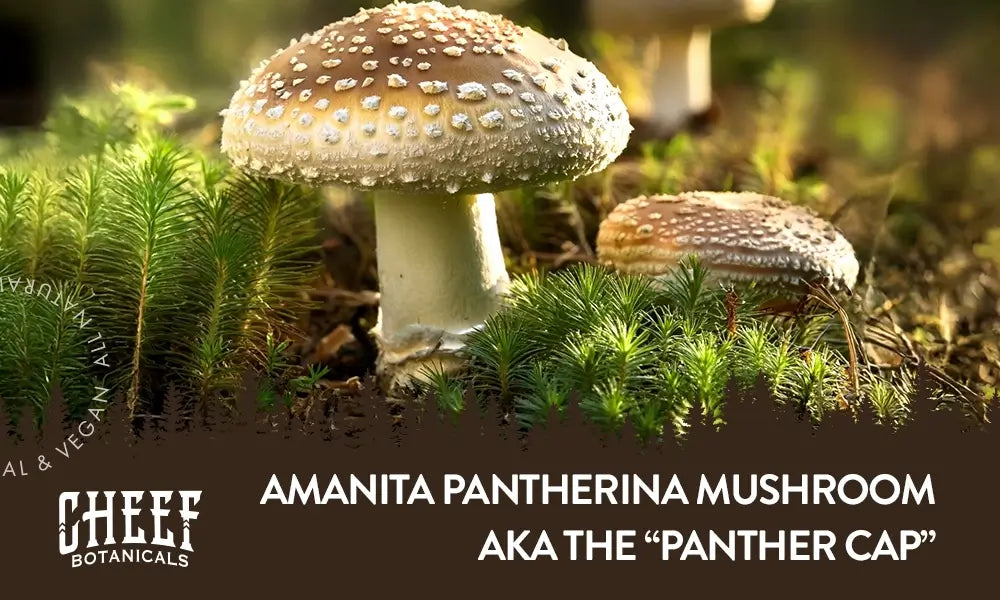
Amanita Pantherina, also known as the Panther Cap, is a mushroom that is as fascinating as it is eye catching. Its dark brown cap covered in white spots makes this visually striking mushroom easy to recognize and a common subject of curiosity.
Closely related to the Amanita muscaria, Amanita Pantherina mushrooms share similar psychoactive compounds such as muscimol and ibotenic acid. These psychoactive properties are a major reason this uncommon mushroom continues to attract attention.
Keep reading as this guide has got you covered. We will explore how to spot Amanita Pantherina in the wild, what makes its psychoactive compounds unique, and the risks involved, while helping you better understand this visually striking mushroom.
Distribution and Natural Habitat
The Amanita Pantherina mushroom, often called the Panther Cap, grows best in forests with hardwood trees, particularly beech and oak. You will find Amanita Pantherina mushrooms across Europe, North America, and parts of Asia, including areas like the Pacific Northwest and British Columbia. This uncommon mushroom prefers moist ground rich in soil nutrients, where it forms close relationships with tree roots while deriving nutrients from the surrounding forest floor.
Prime Season for Growth
Amanita Pantherina mushrooms typically appear from late summer through early autumn, with peak growth between August and October. Warm temperatures, humidity, and rainfall create ideal conditions, although growth patterns can naturally vary based on location and weather. In regions like western North America, seasonal changes and soil nutrients play a big role in how abundant panther mushrooms become.

Etymology
The name Amanita Pantherina comes from its panther like appearance, inspired by a dark brown cap covered with densely distributed warts that appear pure white. This visually striking mushroom is closely linked to Amanita muscaria, also known as the fly agaric, which shares similar visual traits. The panther cap name fits its bold look and helps distinguish it among other Amanita species found in the wild. Its appearance and the psychoactive compounds it carries make it a mushroom that's hard to forget.
Taxonomic History
The Amanita Pantherina has a long taxonomic connection with Amanita muscaria, as both were once grouped due to shared psychoactive compounds. Over time, researchers identified clear differences in muscimol and ibotenic acid, which led to the Panther Cap being classified as its own species within the Amanita species group. This separation helped clarify how Amanita Pantherina mushrooms differ from closely related species.
Psychoactivity
The Amanita Pantherina mushroom is known for its strong psychoactive properties, mainly from muscimol and ibotenic acid. These psychoactive constituents can influence perception and sensory experience, and they differ from what is typically associated with a classical psychedelic. Effects from psychoactive amanita species naturally vary based on preparation, amount, and other external factors.
Understanding how these species compounds behave helps set realistic expectations before exploring Amanita Pantherina mushrooms further.
Toxicity
The toxicity of Amanita Pantherina is especially important when discussing raw forms. High levels of ibotenic acid and muscimol can lead to discomfort, queasiness, and other toxic effects, which is why raw Panther Cap mushrooms are considered poisonous.
Even with processing, mushroom poisoning remains a concern with psychoactive amanita species. Outcomes can include severe dehydration and dysphoric effects, making caution essential.
Legalities
The legality of Amanita Pantherina mushrooms varies by region, unlike many controlled psychedelic substances. In parts of North America and other regions, these natural substances may be legal, while some areas enforce restrictions due to their psychoactive nature.
Laws surrounding Amanita species often focus on regulation rather than prohibition. Checking local regulations before interacting with psychoactive amanita mushrooms helps you stay informed and avoid legal issues.

Description Guide
Identifying Amanita Pantherina mushrooms comes down to paying attention to a few clear visual details. This visually striking mushroom has features that help separate it from other wild growing mushrooms.
Below is a simple breakdown to help you recognize the Panther Cap more confidently.
- Cap. The cap is dark brown with densely distributed warts that appear pure white. It starts initially domed and slowly flattens with age, usually measuring 5 to 15 cm across. The surface can feel slightly viscid when wet.
- Gills. The gills are pale and free, meaning they do not attach to the stem. They may show a faint pale ochraceous brown tone in mature specimens.
- Stem. The stem can reach up to 20 cm tall and features a noticeable ring near the top. A basal bulb is often present at the base.
- Volva. A sac like volva wraps around the bottom of the stem, which is a key identifying trait.
- Spores. The spore print is white, with spores that are broadly ellipsoid and inamyloid spores.
These traits help distinguish fungus Amanita Pantherina from other Amanita species, but careful identification is always essential.
Possible Confusion - Similar-Looking Mushrooms
Identifying Amanita Pantherina mushrooms can be tricky because of closely related species. One common look alike is Amanita muscaria, also called the fly agaric, which shares white spots and psychoactive traits. The Panther Cap is typically dark brown with more densely distributed warts, helping set it apart.
Another species sometimes confused with fungus Amanita Pantherina is Amanita rubescens, known as the Blusher. It lacks the same psychoactive compounds like muscimol and ibotenic acid and often shows a reddish tint.
Confusing amanita species can raise the risk of mushroom poisoning. Focusing on cap color and wart patterns helps you better identify psychoactive amanita species.
Related Post: Exploring Amanita Persicina: Benefits & Market Potential
Potential Health Benefits of Amanita Pantherina
Amanita Pantherina mushrooms are best known for their psychoactive properties, and some people are interested in their broader potential. While research is still developing, attention often focuses on psychoactive compounds like muscimol and ibotenic acid. These species compounds are part of what makes this uncommon mushroom widely discussed.
Here are a few commonly mentioned areas of interest:
- Mood Boost. Some people explore Amanita Pantherina mushrooms with the intention of supporting a more balanced or uplifted mindset.
- Relaxation and Sleep. Others are drawn to the Panther Cap for its reputation around calming effects and deeper relaxation.
- Discomfort Relief. There is also interest in how its psychoactive constituents may relate to overall physical ease, though findings naturally vary.
It is important to remember that Amanita Pantherina is considered poisonous and can have toxic effects, especially at high doses.
Consuming Psychoactive Amanita Species
Interest in consuming psychoactive amanita species often comes with many questions and mixed expectations. The experience can naturally vary based on preparation methods, amount, and individual response, which is why outcomes are not consistent for everyone.
Because psychoactive amanita species contain psychoactive compounds like muscimol and ibotenic acid, approach and awareness matter. Misunderstanding these species compounds or overlooking key details can increase the risk of unwanted effects. Taking time to understand how these mushrooms differ from other natural substances helps set realistic expectations before exploring them further.
Product Types
Amanita Pantherina mushrooms are found in several product forms, giving consumers different ways to explore them:
- Dried Mushrooms. A traditional option that allows for easier storage and preparation.
- Gummies. A more approachable format that offers convenience and controlled portions.
- Tinctures. Liquid extracts that allow for flexible use and precise adjustments.
These product types give people options to interact with psychoactive amanita species in ways that align with their preferences, while still requiring careful consideration.
Similar Species
Some Amanita species share overlapping traits, which can make identification difficult if you are not experienced. Panther amanita is a name often used when comparing look alike mushrooms, especially alongside Amanita muscaria, one of the most commonly confused species. Understanding both the similarities and differences helps you avoid mix ups when examining wild mushrooms more closely.
Amanita Muscaria
Amanita muscaria, also known as the fly agaric, is one of the most well known psychoactive amanita species. Like Amanita Pantherina, it contains psychoactive compounds such as muscimol and ibotenic acid and often grows near hardwood trees like oak and beech.
The key visual difference is the cap. Amanita muscaria usually has a bright red or orange cap, while the Panther Cap has a dark brown cap with densely distributed warts, making it easier to distinguish once you know what to look for.
Product Types
We offer Amanita muscaria products in several forms, giving you different ways to explore this well known amanita species. Each option is designed to fit different preferences while keeping the experience straightforward and consistent.
- Dried Mushrooms. Our Amanita Muscaria Dried Mushrooms are made from carefully selected and dried caps. The drying process helps preserve key psychoactive compounds like muscimol and ibotenic acid, offering a traditional format that many people recognize. These mushrooms are grown and processed in the USA.
- Gummies For a more convenient option, you can try our Amanita Muscaria Gummy Cubes. These gummies are made with natural muscimol and Amanita muscaria extract, providing a more measured and approachable format. Other available options include Amanita Muscaria + D9 Gummies Cubes, Amanita Muscaria + Delta-9 THC + HHC Gummy Cubes, and Amanita Muscaria + Delta-9 THC + THCp Gummy Cubes.
- Tinctures. Amanita Muscaria Tincture is a liquid extract created by soaking Amanita muscaria mushrooms in alcohol. This format allows for flexible adjustments and is often chosen by people who prefer liquid options. Starting with a small amount helps you better understand how it naturally varies for you.

Why Choose Cheef Botanicals Amanita Products
When exploring Amanita Pantherina mushrooms or other psychoactive amanita species, quality matters. At Cheef Botanicals, products are carefully sourced and tested to verify species compounds like muscimol and ibotenic acid.
All products are COA tested, and you can choose from dried mushrooms, gummies, or tinctures based on what fits your preferences. This gives you confidence in consistency while exploring natural substances responsibly.
Final Thoughts - Amanita Pantherina
Amanita Pantherina is a unique mushroom with interesting psychoactive properties. Whether you're looking for spiritual experiences, mood boosts, or deep relaxation, this psychoactive amanita mushroom offers something different from common choices like psilocybin mushrooms.
However, it contains muscimol and ibotenic acid, so consuming Amanita Pantherina mushrooms carefully is important since these compounds can strongly impact the central nervous system.
If you're considering trying it, buy products from a trusted source like Cheef Botanicals, where quality and safety come first. The key to enjoying Amanita Pantherina is understanding its effects and using it wisely.

Author Bio
Top-Rated Products Featuring Amanita Mushrooms
 Amanita Muscaria Gummies - Top Seller
 Amanita Muscaria Dried Mushroom Caps - Excellent Choice
 Amanita muscaria + Delta-9 THC + THCp Gummy Cubes - Highly Rated
 Amanita Muscaria + D9 Gummies - Good Value



Leave a comment
This site is protected by hCaptcha and the hCaptcha Privacy Policy and Terms of Service apply.