
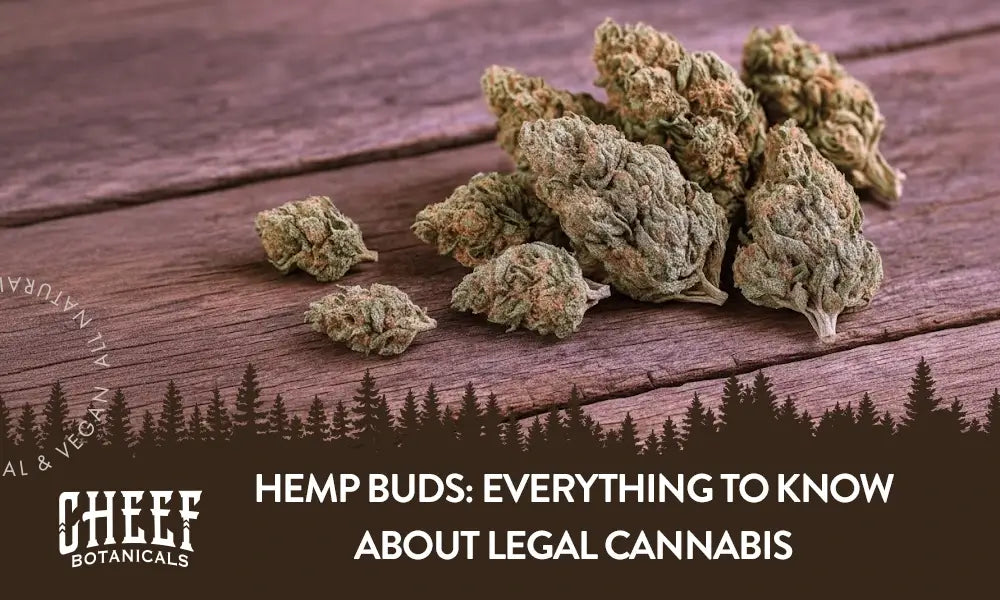
One look is all it takes to mistake hemp for marijuana. After all, hemp buds have the same frosty appearance and bold aroma, and it definitely looks and smells like marijuana. That similarity is where the confusion starts.
Hemp and marijuana share the same roots, but THC is what draws the legal line. Breeding moved away from sheer potency and focused more on cannabinoids and terpenes. That’s what put CBD-rich hemp strains on the map.
In this guide, we'll put the confusion to rest and explain why hemp buds aren’t what most people assume.
What Is Hemp?
When you hear the word hemp, marijuana often comes to mind, but the two are not the same. Both belong to the Cannabaceae family and share a genetic backbone, yet they are grown for different outcomes.
Unlike marijuana, hemp is cultivated to produce cannabinoids that do not cause intoxication. It is defined by its very low THC levels, testing at less than 0.3 THC by dry weight. This chemical boundary shapes how the plant is classified, regulated, and experienced.

THC
Tetrahydrocannabinol, often called Delta-9 THC, creates the intoxicating feel tied to cannabis. Even small amounts can affect perception, which may interfere with tasks that require focus. The response happens as THC interacts with your endocannabinoid systems (ECS). No wonder many people look to CBD for a clearer, non-intoxicating experience.
CBD
CBD sits close to THC on a molecular level, yet the experience feels noticeably lighter. You stay clear-headed, steady, and present. That’s why many people gravitate toward CBD options, including hemp oil, when they want the feel of cannabinoids without anything clouding focus or coordination.
How Is Hemp Different Than Marijuana?
Now let's take a closer look at what truly separates hemp from marijuana. Those differences also explain why hemp is permitted in many places while marijuana remains restricted under state and federal law.
Hemp
This form of cannabis is bred for balance rather than intensity. Hemp (Cannabis sativa L.) carries high CBD and very low THC. Before the discovery of the ECS in 1992, hemp served as an industrial product for millennia, with uses spanning agriculture, maritime work, and construction. Today, industrial hemp is a reliable source of CBD, offering cannabinoid-rich extracts without intoxicating effects.
Marijuana
Marijuana is the cannabis variant most people recognize, mainly because of its high THC content. Its CBD content varies by strain, which affects how it feels. Sativa strains usually carry more THC with less CBD, while Indica strains often show more balanced cannabinoid profiles, depending on genetics. Those differences influence intensity, onset, and the overall experience from one strain to the next.
Legalities of Hemp & Marijuana
Federal law draws a clear line between hemp and marijuana. The 2018 Farm Bill defines hemp as cannabis with THC levels below 0.3% by dry weight, which makes it legal in many states. Cannabis exceeding that limit is classified as marijuana. That places marijuana plants under stricter federal restrictions despite varying state laws.
What Are Buds?
The best way to answer the question, "What are hemp buds?" is to understand the plant's anatomy. This makes it easier to see how energy and compounds move through the plant. Below are the main parts of a cannabis plant.
Roots
Roots grow underground and keep the plant fed. They absorb water and nutrients while removing waste to support healthy growth.
Stem
The stem is the long structure that supports the plant. It moves nutrients from the roots and leaves to the rest of the plant. Both the stem and roots contain very little cannabinoid content.
Nodes
Nodes are small points along the stem where branches form. These spots mark where new growth splits off and develops.
Leaves (Fan/Sugar)
These are the familiar five-to-nine-pointed leaves most people associate with cannabis. They convert light into energy through photosynthesis. Fan leaves contain very few cannabinoids, while sugar leaves hold more and grow closer to the flowers.
Flowers (Buds)
Flowers form at the ends of nodes and represent the most valued part of the plant. Male plants produce small pollen sacs, while female plants develop large, resin-coated flowers rich in cannabinoids.
That sticky resin gives cannabis buds their aroma and cannabinoid content. These female flowers are trimmed into the shapes most people recognize and are the portion most often used. As growth continues, flowers cluster into colas, with the largest forming at the top of the plant.
The same flowering structure appears across cannabis types, including hemp buds, with differences coming from cannabinoid levels rather than plant anatomy.
Seeds
Female plants focus on bud growth, though seeds can form after pollination. Growers often prevent this to keep energy directed toward flowers. When pollination occurs, a hemp seed develops instead. Male plants flower as well, but they produce pollen and seeds rather than dense buds.
Does Hemp Have Buds?
So, does hemp have buds? Yes, it does. Hemp and marijuana share the same plant anatomy, including how flowers form and develop. The key distinction comes from the resin's chemical profile, not the structure of the bud itself. Cannabis flowers are commonly referred to by a few different names, depending on context:
- Hemp flowers
- CBD flowers
- CBD buds

Hemp Buds vs. Marijuana Buds
Hemp buds and marijuana buds look nearly identical at first glance, which makes quick identification tricky. Visual differences alone rarely tell the full story. A lab test offers the clearest answer by measuring THC levels, though that option isn’t always practical.
Growing methods add another layer of contrast. Hemp production often emphasizes minimal intervention, which can influence appearance, aroma, and texture. Subtle details like density, trichome coverage, and scent help separate one from the other with closer inspection.
THC Content
THC levels offer the clearest way to separate hemp from recreational marijuana. Hemp products stay at or below 0.3% Delta-9 THC, while marijuana exceeds that limit.
Certificates of Analysis help confirm those numbers by showing potency and composition. Checking a COA while shopping for high-quality hemp flower helps keep your expectations clear. It also helps ensure your purchase is federally legal under the 2018 Farm Bill.
Bud Size
Bud size can vary across cannabis plants, even within the same category. Outdoor-grown hemp flowers may appear smaller or looser, while indoor-grown marijuana often develops larger, denser buds due to tighter environmental control.
A noticeably large bud does not automatically signal potency. Size alone reflects growing conditions more than cannabinoid levels, so appearance offers clues but never a full answer.
Bud Density
Bud density varies just like size. Outdoor-grown hemp often looks fluffier, while indoor marijuana grows denser through tighter control. A dense feel in your hand can hint at marijuana, though density alone never confirms potency.
Trichomes
Trichomes play a big role in how a flower looks and functions. These tiny structures protect the plant and create the frosty coating seen on many buds. Cannabinoids form inside trichomes, along with terpenes and flavonoids that shape aroma, flavor, and color.
Coverage varies widely between plants and strains. Hemp flowers often carry fewer trichomes overall, though the ones present tend to be thicker and easier to spot. That structure can give the hemp plant a frosty appearance, even when total trichome density remains lower than that of marijuana.
Bud Aroma
Aroma varies by strain and growing conditions. Hemp buds can smell mild or pronounced, while indoor-grown marijuana often carries stronger scents. Terpenes create those aromas and flavors.
Resin concentrates those compounds, which explains why marijuana typically smells richer and feels more intense.
Can You Smoke Hemp?
Hemp comes from the same plant family as marijuana, so the flower smokes and vaporizes in familiar ways. Smoking hemp flower delivers cannabinoids without the intoxicating edge linked to high THC, making hemp a better option when clear-headed effects matter.
Only the flower is used, since stems and leaves hold minimal cannabinoids and create harsh smoke. Several methods are common:
- Water Pipes: bongs, bubblers, hookahs
- Pre-Rolls/Joints: flower rolled for easy use, often with a filter
- Pipes: hand pipes, steamrollers, one-hitters
- Vaporizers: devices that heat dried flower to release cannabinoids and terpenes
Water filtration cools smoke before inhalation, which feels gentler. Vaporizers warm the flower without burning it, reducing harshness and keeping flavor intact.
Can Hemp Buds Get You High?
Hemp products do not produce a high. Hemp buds are known for a calmer, more settled feel instead. That feel comes from high CBD and very low THC, which keeps the experience clear and non-intoxicating.
What Does It Feel Like to Smoke Hemp?
Smoking hemp tends to make you feel calm and steady, without mental fog. Many people describe effects such as:
- A relaxed, uplifted mood
- Easier focus and mental clarity
- Less muscle tension or soreness
- Deeper, more settled sleep
- A stronger, more noticeable appetite
- Fewer worried or negative thoughts
Effects arrive quickly, often within seconds of inhalation, making hemp a better option when you're after fast, predictable results.
Why Do People Use Hemp Buds?
Hemp flower appeals for many practical reasons. With CBD available in several formats, hemp buds are perfect for those who prefer a simple, direct way to experience cannabinoids through the flower itself.
They’re Rich in CBD
Many people turn to CBD to experience cannabis without intoxication. Subtle shifts in mood and perception often feel gentle and manageable. That balance keeps the experience clear, steady, and easy to fit into everyday routines without feeling overwhelming.
There Are Other Beneficial Compounds
THC and CBD are only part of the picture. Cannabis contains around 120 identified cannabinoids, each with its own traits. Terpenoids and flavonoids add another layer, shaping aroma, flavor, and subtle beneficial effects that influence how the plant feels overall.
Full-Spectrum (Synergistic Effects)
Cannabis often feels more complete when its natural compounds work together. Cannabinoids, terpenes, and flavonoids interact in ways that shape the overall experience. That’s why full-spectrum options are popular across the hemp industry, offering a broader profile while keeping THC levels within legal limits.

What Else Can Hemp Buds Do?
Beyond smoking, hemp buds can be processed to extract CBD and other cannabinoids. These flowers hold the highest concentrations, which is why they serve as the base for many common CBD applications today.
Topicals
Applying a CBD topical allows it to interact with CB2 cannabinoid receptors located throughout the skin. Many people turn to these products for workout recovery, skin nourishment, and easing minor soreness or muscle tension. Common options include lotions, salves, balms, bath bombs, and lip balms.
Tincture
Placing a CBD tincture under your tongue allows for quick absorption. The thin membranes in that area help cannabinoids enter the bloodstream faster than many other methods. Effects often appear sooner, second only to inhalation in terms of speed.
Edibles
Edibles work differently because cannabinoids need heat to activate. Raw flower does very little on its own. Once cannabinoids are heated during infusion through a process called decarboxylation, they shift into forms the body can absorb. That process is the reason edibles feel more noticeable and tend to last longer.
Gummies, cookies, and candies remain popular, while infused drinks continue to add variety. Timing plays a role, since effects arrive more slowly than inhalation. That slower onset often feels smoother and more gradual. Rotating between edibles and other formats keeps routines flexible and predictable. On some days, a longer-lasting edible fits better, while other moments call for smoking or vaping instead.
Concentrates
Hemp buds can also be processed into concentrated CBD forms with higher cannabinoid density. Clean extraction methods are crucial here. Solvent-free CO₂ extraction pulls CBD from the plant without harsh residues, keeping the final product consistent and refined.
Each concentrate type follows a slightly different process, which explains the range of textures, colors, and uses. Exploring these options helps match form to preference and routine.
- Distillate: Neutral in taste and aroma, often used as a base for other products.
- Wax: Soft and workable with a light yellow tone.
- Isolate: A fine white powder made of pure CBD only.
- Shatter: Translucent and brittle with a glass-like snap.
Drinks
Hemp drinks add another easy option. CBD-infused beverages use nano-sized droplets that mix evenly with liquids, improving absorption compared to standard CBD oils. Seltzers, juices, and sodas deliver a smooth, refreshing format that fits casual moments without extra steps, fitting into your routine.
Flower Strains
Hemp flower strains come in a wide range of profiles, each offering its own aroma, flavor, and overall feel depending on genetics and cultivation style.
- Hawaiian haze
- Lifter
- Source Space Candy
- Sour Diesel
- Durban Diesel
- Purple Gas
- Special Sauce
- Wagyu Kush
- Skywalker OG
- OG Kush
- Golden Source
- Ceiba Fox
- Suzy Q
- Bubba Kush
Final Thoughts - Hemp Buds
Hemp buds help clear up common confusion around cannabis. They share the look and structure of marijuana, yet their low THC content leads to a very different experience. Once you understand the chemistry and legal limits, choosing becomes easy. With flexible use options and diverse strains, hemp buds fit easily into your daily routine. Explore trusted hemp flower and CBD options at Cheef Botanicals.

 CBD Gummies - Top Seller
 CBD + THC Gummy - Excellent Choice
 CBD Hemp Flower - Highly Rated
 Full Spectrum CBD Oil - Good Value



Leave a comment
This site is protected by hCaptcha and the hCaptcha Privacy Policy and Terms of Service apply.